“MEDS has received a notice from the USAID Kenya and East Africa on January 26, 2025, directing implementing partners to immediately cease, suspend, or halt any work being performed under contracts, task orders, grants, or other assistance instruments issued by USAID.”
This is the memo received by KEMSA’s CEO, Dr. Waqo Ejersa, from the Mission for Essential Drugs and Supplies (MEDS)
The US government, which provides up to 70% of ARVs through USAID and CDC, entrusted MEDS in 2020 to supply medical consignments and HIV commodities in Kenya, including malaria and tuberculosis drugs. This was in response to the COVID-19 billionaires scandal, which eroded donors’ trust in KEMSA.
That was the case until the November 5, 2024, presidential elections in the US, which ushered in a new sheriff who came to town with a mixed bag of policies affecting the US and the rest of the world.
President Trump ran for office, promising his people to reevaluate the United States’ foreign aid obligations to ensure they are consistent with the new administration’s America First agenda. According to him, his administration is morally obligated to stop blindly doling out money to other states with no return for the American people.
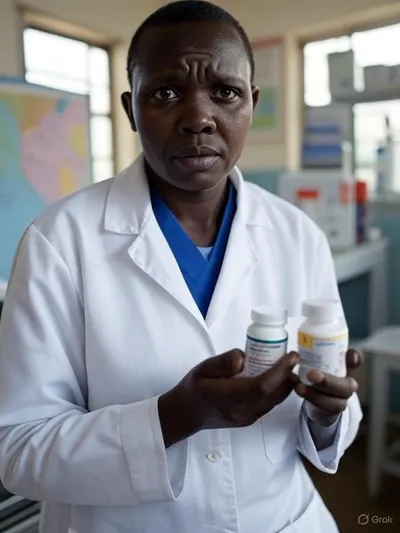
That involves halting the processing of all US-funded essential drugs and crucial commodities paid for by the United States Agency for International Development (USAID). This will affect the distribution of life-saving treatments for HIV, malaria, and tuberculosis via the Kenya Medical Supplies Authority (KEMSA) and will impact 54 other countries.
And that is expected of any head of state. “Donald Trump is not to be blamed as I did not vote in the US. I voted in Kenya and expect my government to protect us,” says Caren Omanga Othatcher, the NEPHAK leader from Nyando, Kisumu, who has been living with HIV for 29 years.
However, that will not be without repercussions as MEDS immediately halted orders from KEMSA and clarified that USAID would only cover costs incurred before January 24, 2025.
Mrs Othatcher added, “This move will affect us massively as we have depended on USAID for ARVs. It’s worse for those who are aging, as they are bound to attract opportunistic infections like other STDs, high blood pressure, and stress, which can be devastating for people taking ARVs.”
In the opinion of Nelson Otwoma, the director of the National Empowerment Network of People Living with HIV/AIDS in Kenya (NEPHAK), the consequences will be felt in three to six months when the current stock of ARVs issued to people living with HIV is expected to run out.
The immediate impact is the closing of HIV laboratories that carry out tests instrumental in the management of HIV care. Some NGOs have been forced to shut down. The ones opened are rationing drugs. Others have sent workers home on compulsory unpaid leave for at least three months pending the outcome of the US government review. These employees were responsible for dispensing the drugs and counseling patients like expectant women to prevent mother-to-child transmissions.
This is confirmed by Isaac Rabari, an Adherence Councillor in Kitui, who told me, “There are lab tests that were done as the norm but are currently not happening because the riders that would transport the samples have lost their jobs, and thus everything has stalled.”
People living with HIV/AIDS rely on these lab tests along with the physical examination as part of their ongoing care to ascertain how well the medication is working, get the virus under control, improve immune status, and prevent opportunistic infections. The tests include viral load tests, CD4 cell count, blood chemistry tests, drug resistance tests, and STD screening.
For Isaac Rabiri, “The move is worsening the mental health of the affected individuals as they remain in panic mode and uncertain about their treatment and jobs.”
The impact is not limited to the health sector; it includes agriculture, research, and youth empowerment. According to Nelson Otwoma, while the crisis has exposed Kenya’s overreliance on donor funds, it also allows the government to take the initiative and protect its citizens from the whims of foreign leaders.
To put it in proper context, we spoke to Prof. Kenneth Ngure, who said, “This is a huge thing. You have seen the number of providers who have been laid off. In Kenya, where most people live in single-income families, interfering with the breadwinner becomes a huge problem in terms of household income. Moreover, Kenya has an unemployment problem. You have seen in the media how companies are shutting down and laying off staff, so it complicates the matter.”
The ball is now in the government’s court, as we have been independent long enough to be required to depend on foreign powers. Mr Otwoma agrees, “The best thing, even if PEPFAR comes back, is that the government should take the initiative.”
Mr Rabiri had a suggestion, “The government should budget for the funds and, better still, invest in a local manufacturer of these drugs to reduce costs and avoid the panic and depression that is currently affecting parts of the population.”
On her part, Mrs Othatcher stated, “The government cannot escape responsibility. They should take this as a lesson so that next time, they will prevent the trauma and anxiety patients experience as a result of dependence on foreign aid.”
Even though the move is unexpected, Prof. Ngure believes that “the government should ensure that services run uninterrupted in terms of providers by either employing more providers to replace those laid off or, most importantly, ensuring we have commodities like ARV drugs, anti-malaria, and TB drugs fully stocked. Otherwise, there will be a shortage, and people will suffer.”
It’s not all doom and gloom, however. As Prof. Ngure told me, “I’ve heard from the ministry that they have plans to take care of the delivery of services.”